18 al 27 de Septiembre
J&L Constructores
Latonería Y Pintura / Umbrales
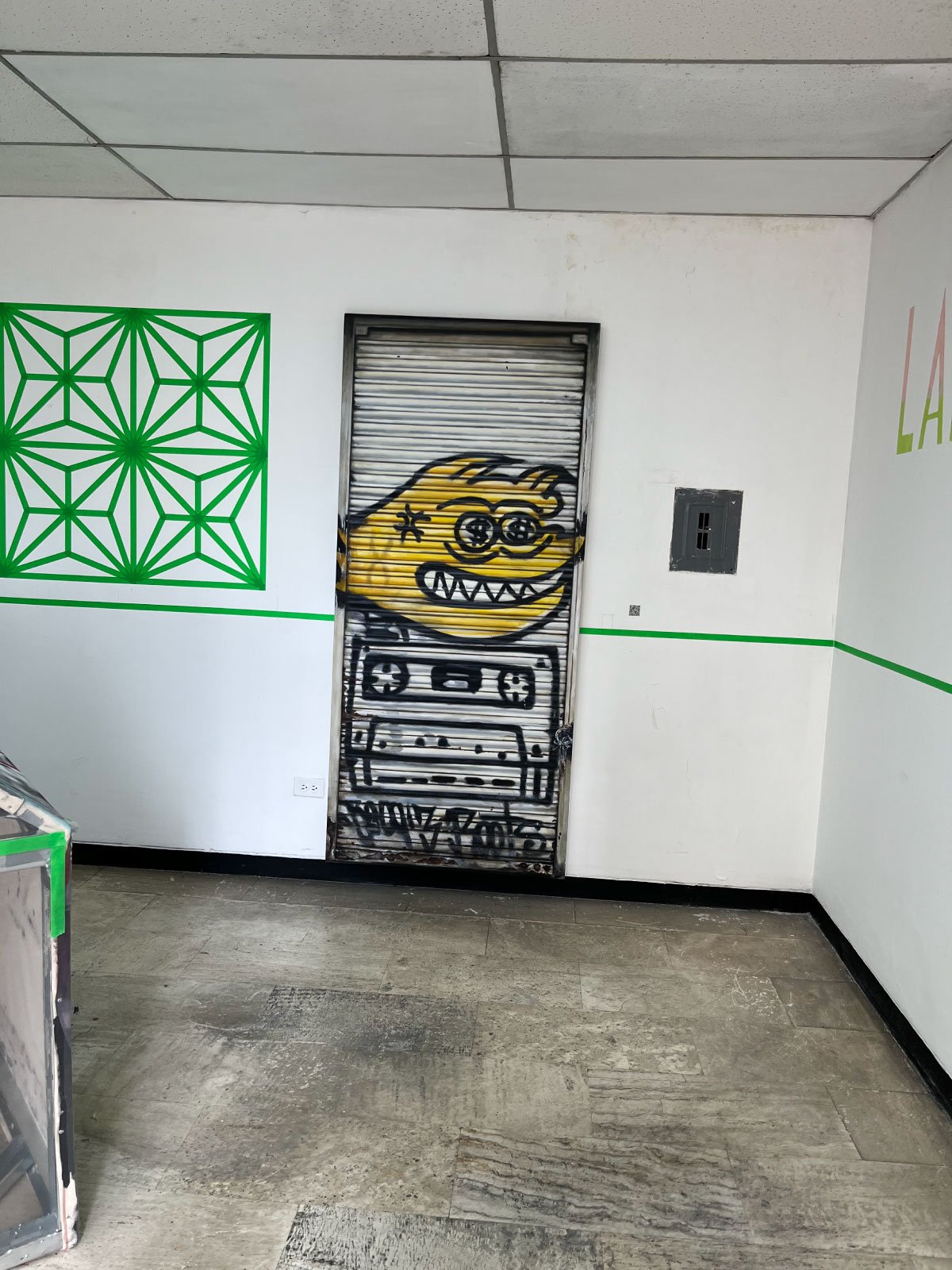
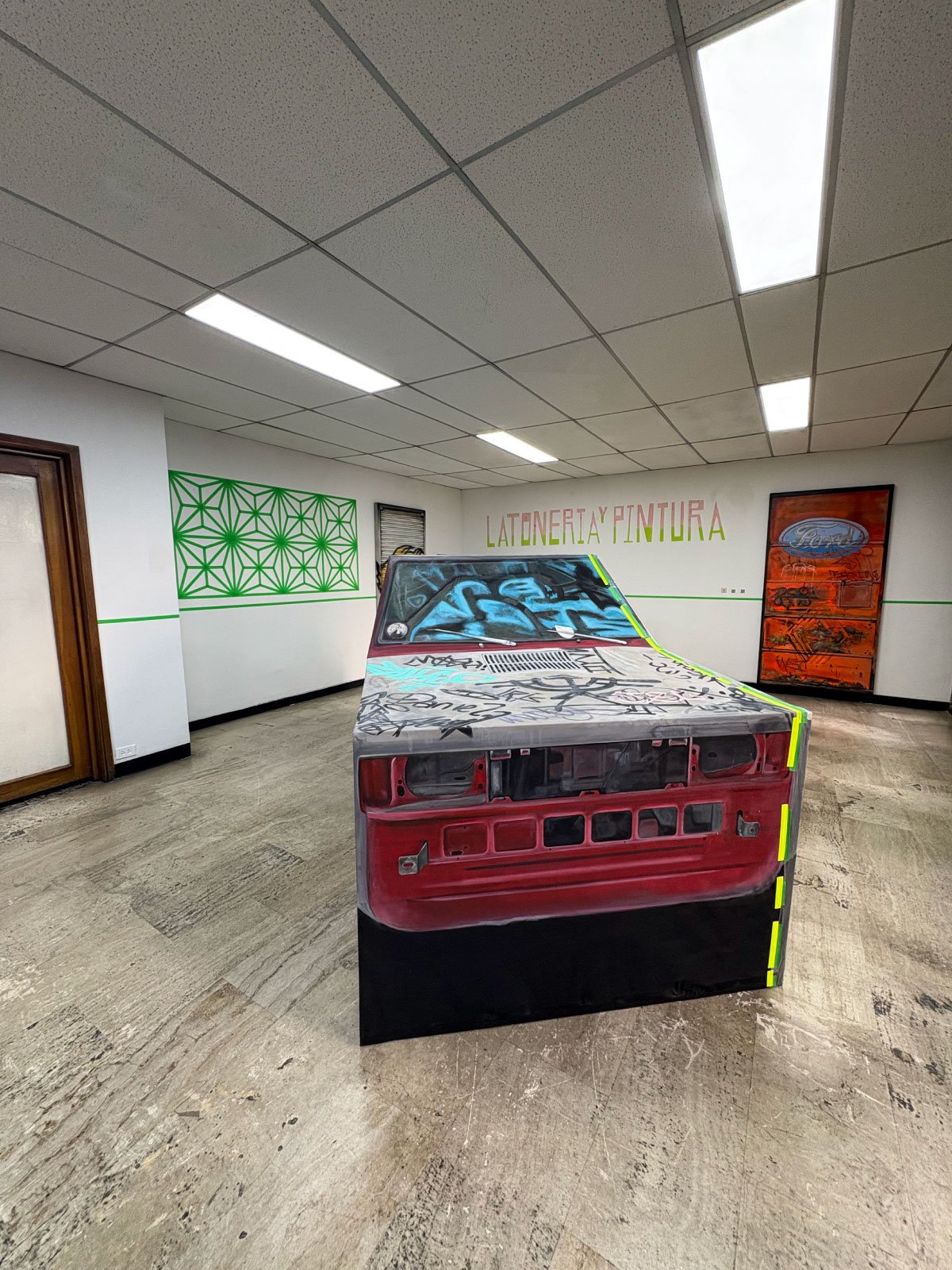
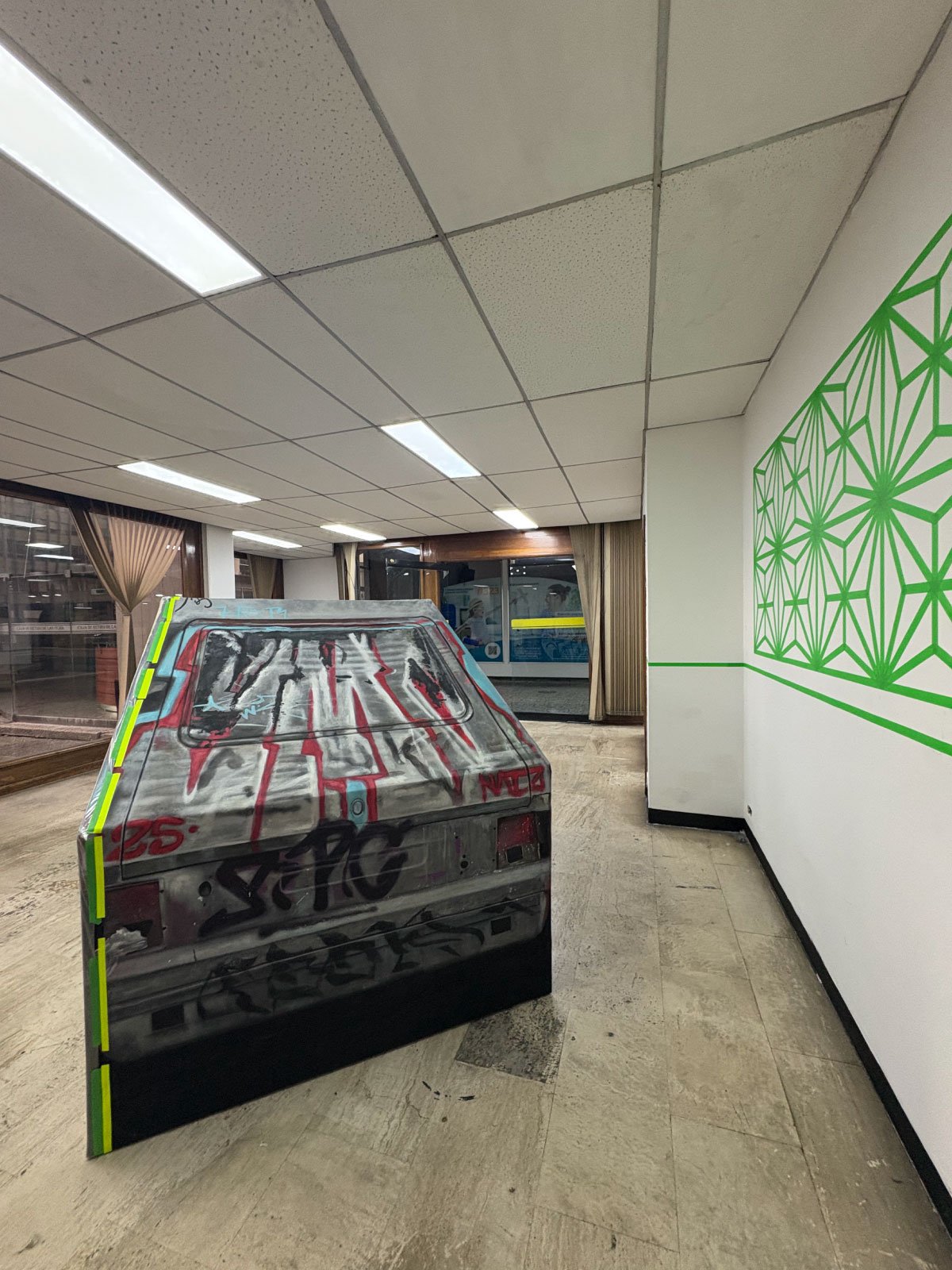
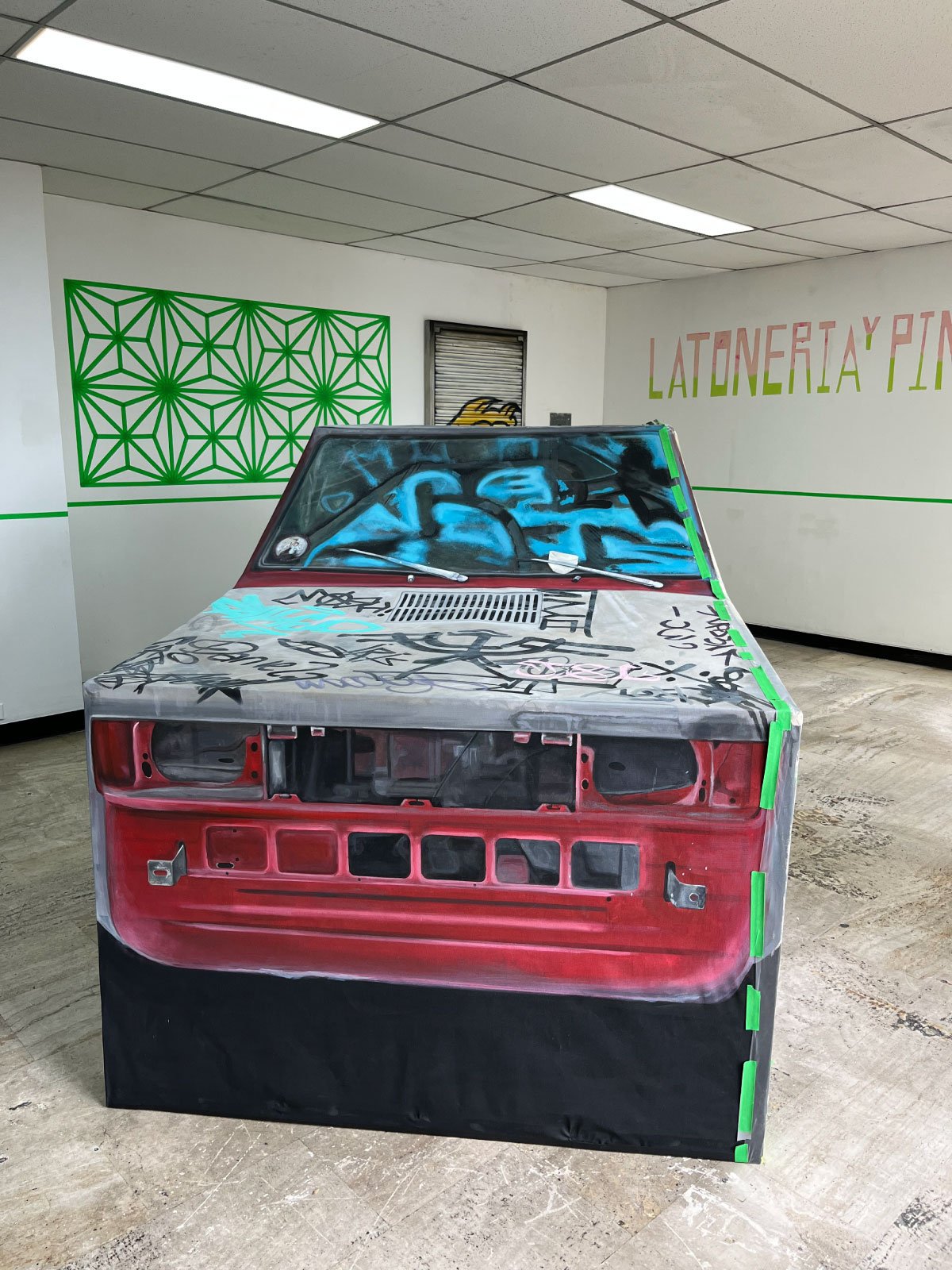
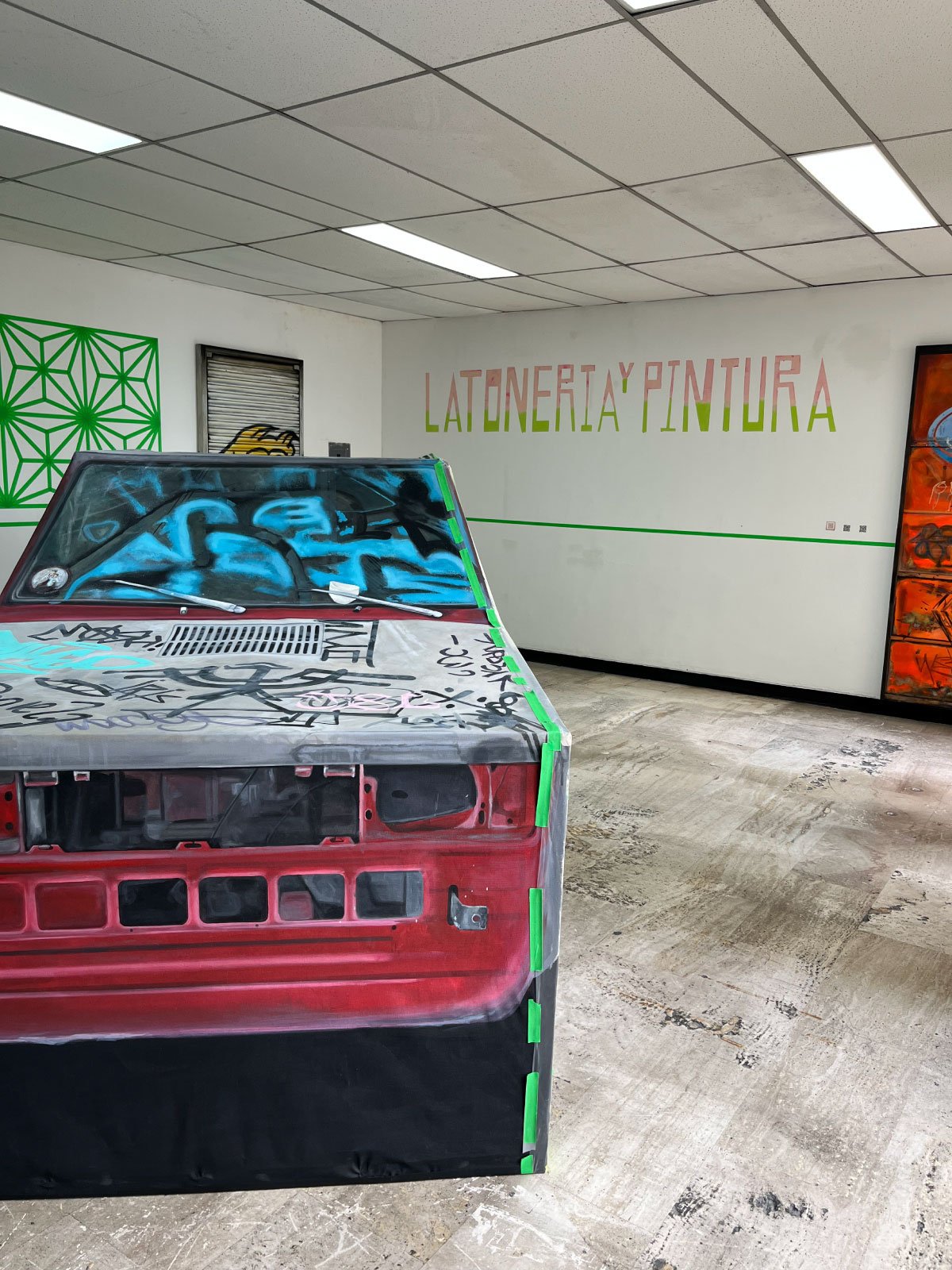
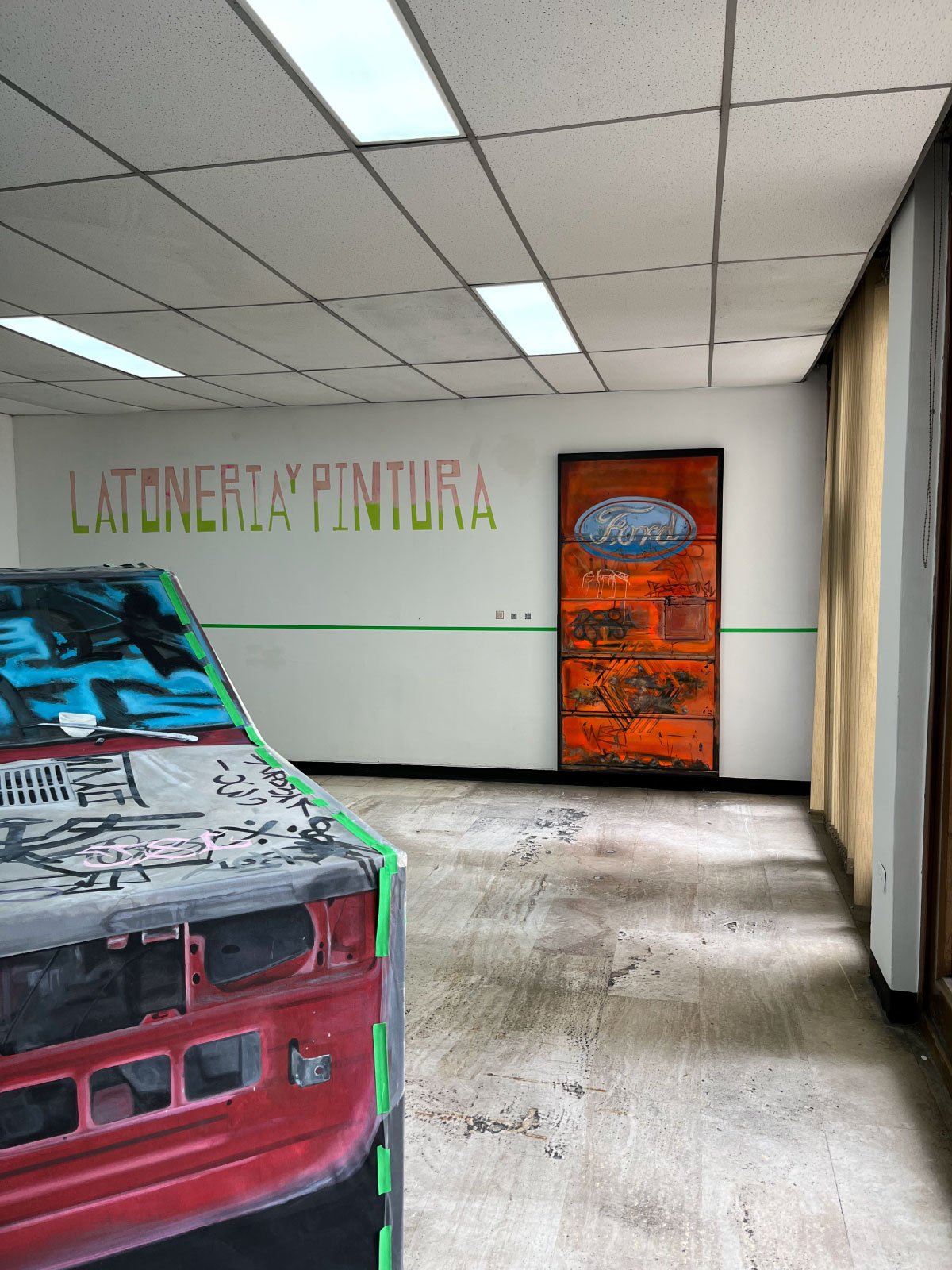
*Latonería y Pintura* (Auto Body & Paint) is an installation that claims the city through painting within working-class contexts. The project begins by acknowledging how painting manifests in everyday life: on house facades, storefronts, signs, and in the gestures of those moving through the city.
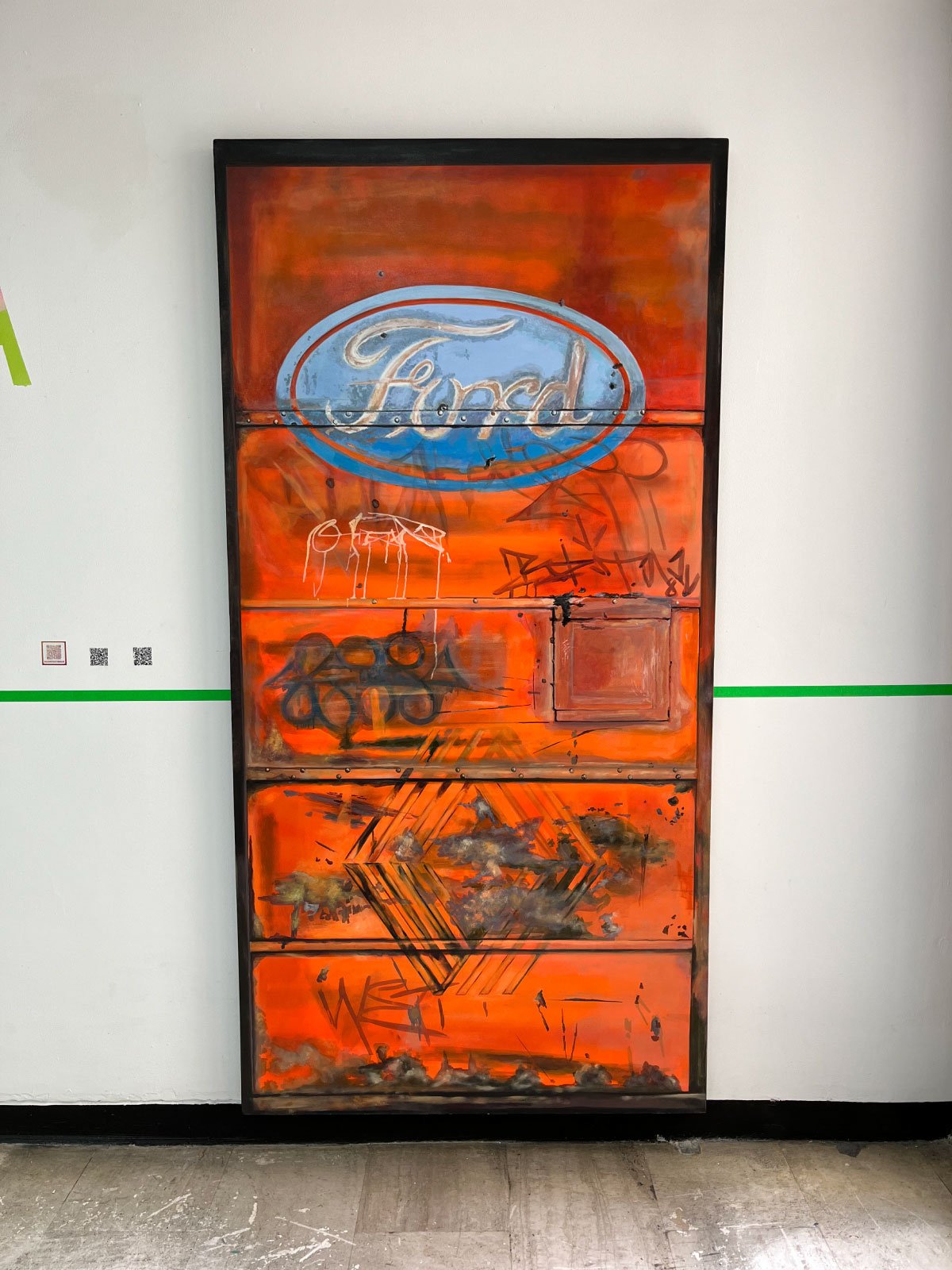
The proposal views painting as an archive of the city. It is not merely about representation, but about recording and preserving the changes that shape its landscape. In this sense, painting becomes a medium that immortalizes the ephemeral and selects elements that might otherwise be lost in the fast pace of urban life. Each piece is a fragment of memory that captures details, acknowledges ways of inhabiting space, and highlights the everyday appropriation of the territory by the people who occupy it. Thus, painting is not simply a re-presentation of what exists; it gives significance to objects, facades, or minor elements that construct the identity of urban space while simultaneously encapsulating stories of transformation, resistance, and endurance.
The installation also incorporates QR codes that link directly to the original geographic location of each depicted element. This connection to Google Maps not only situates the artwork at a specific point in the city but also allows for the recognition of changes over time—revealing what these places looked like and what they have become. At the same time, this tool enables those interacting with the installation to inhabit—albeit virtually—urban spaces they might not otherwise know firsthand. Through this interplay between the pictorial and the digital, the work creates a bridge between physical experience and technological record, expanding the scope of painting toward forms of interaction linked to collective memory.
In this way, *Latonería y Pintura* presents itself as a work of urban memory that functions simultaneously as a record and a study of the city. The artwork operates almost like a form of pictorial archaeology, wherein the depicted objects are investigated, documented, and preserved as significant vestiges of an era. Through this process, the act of painting takes on an investigative and documentary character, akin to a practice that observes, selects, and analyzes the material traces of the territory. Rather than merely fixing an image, the expanded painting here serves as a method for examining how urban space is inhabited and transformed. In this sense, the installation not only produces images but also articulates memory, record, and analysis, creating an archive that connects the everyday with the city’s history and future.