18 al 27 de Septiembre
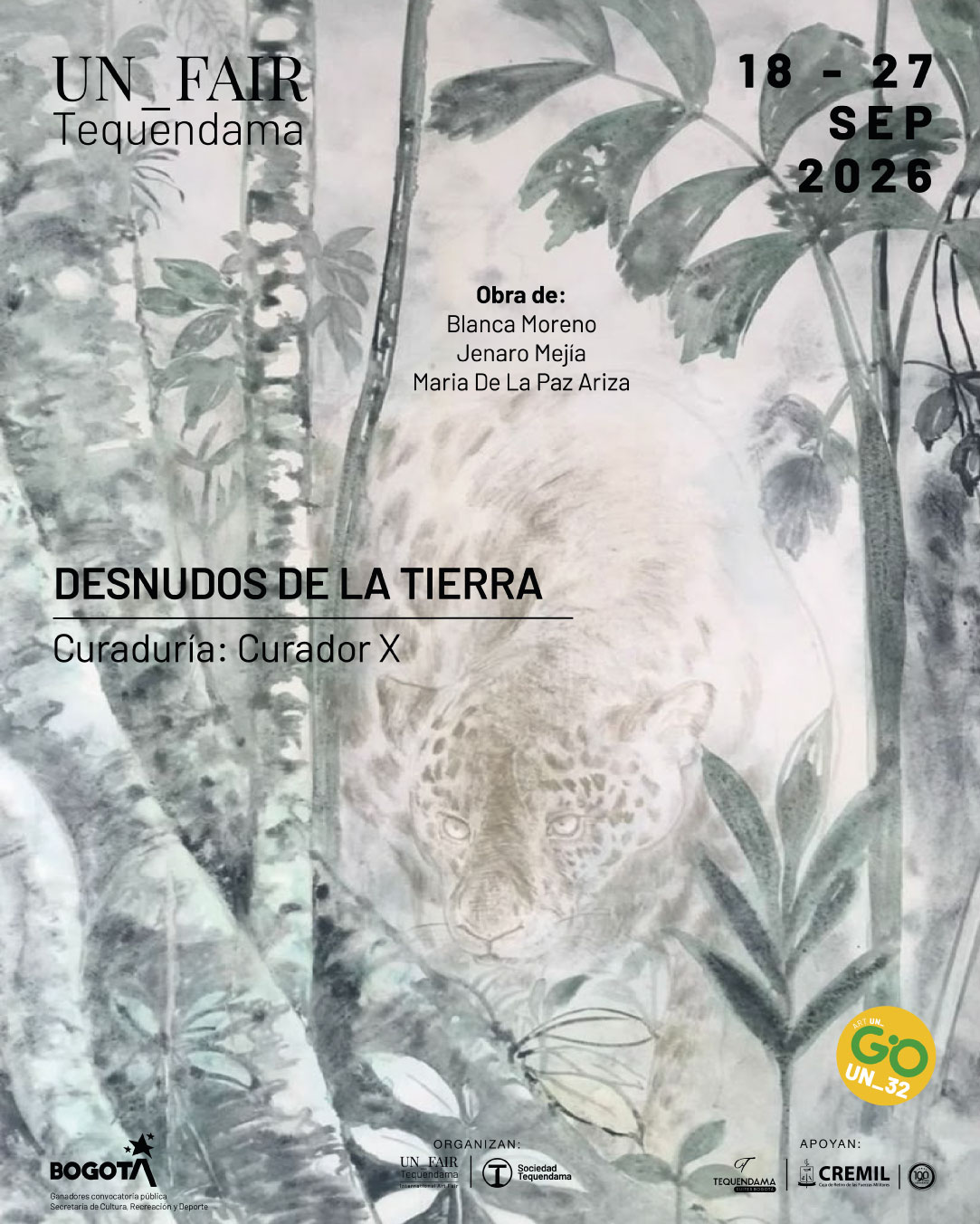
Desnudos De La Tierra
Curatorship:
Curador X
Artists
Blanca Moreno @blancamorenoartista
Jenaro Mejía @jenaromejia
María de la Paz Ariza
Having spent a lifetime in nature does not produce repetition. It produces difference. Some approach nature to represent it; others choose to remain within it. These works are the result of a conscious process of purification, where the superfluous is eliminated. Nature stops being an observed object and becomes the locus from which one thinks. The three artists share a single starting point: a sustained relationship with the natural world. What shifts is how this relationship turns into language, and what each artist had to relinquish to find it. In María de la Paz Ariza’s work, landscape dissolves into atmosphere. Mountain, mist, and dawn light cease to organize a view and begin constructing an inner experience. Her painting does not document the Andean territory: it inhabits it. Each glaze, each transition between planes, is a form of attention that transforms the motif into living matter. In Jenaro Mejía’s work, nature asserts itself. The pictorial surface densifies to suppress any void: there is no background or hierarchy. Everything insists with equal urgency. Painting a plant with the precision of one who knows it and the reverence of one who loves it is, in itself, a political act. His work is neither denunciation nor celebration; it is an ethics of gaze—a declaration that biodiversity is not a resource, but a presence. In Blanca Moreno’s practice, nature organizes as a system. Forms are not isolated but interconnected: each leaf, animal, and forest element exists in relation to the rest. Watercolor does not fixate: it dissolves borders, allowing figures to blend into the background and turning technique into argument. What we see is not a depicted jungle, but the jungle as a logic. Three paths, one single territory. In no instance does technique serve as mere display. Execution is precise because technique is no longer in question: know-how and insight coincide. Every decision—Ariza’s glazes, Mejía’s saturation, Moreno’s monochrome layer—is a way of understanding what is painted, not merely showing it. Nudity is not a starting point; it is a point of arrival. It is what remains after time has done its work—when no ornament, distance, or need for proof remains. In Ariza, form dissolves. In Mejía, the surface is occupied without excess. In Moreno, every element becomes necessary. It is stripping down while preserving only the essential. The earth does not appear here as a landscape, background, or setting; it is a condition. It is not observed from without, but worked from within. This exhibition presents not nature itself, but what happens when remaining within nature transforms into belonging to it.