18 al 27 de Septiembre
Iván Castiblanco
Memoria Entre Líneas
Traversing a territory entails an endless imaginative endeavor; there are countless paths we might chart. Cities emerge and vanish, while traces settle onto the map of our memory like imperceptible scars—sometimes consciously, other times by chance.
Dialects, food, parks, children, and their games. At the next corner—streets and avenues, a moment of orientation—the mental map is recreated, and a multitude of regions come to be held within a single memory; there are as many games as there are children, and as many toys as there are places visited.
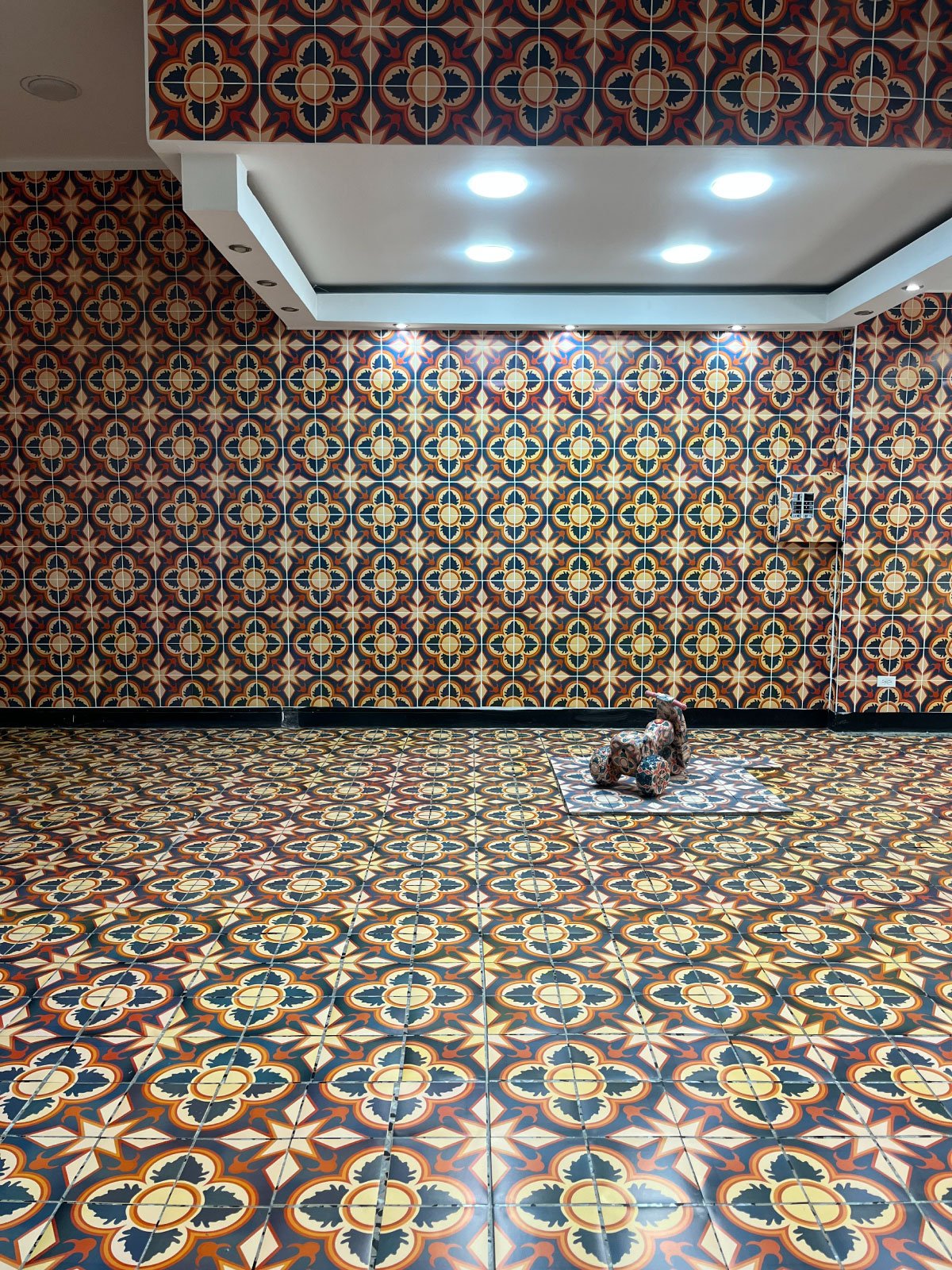
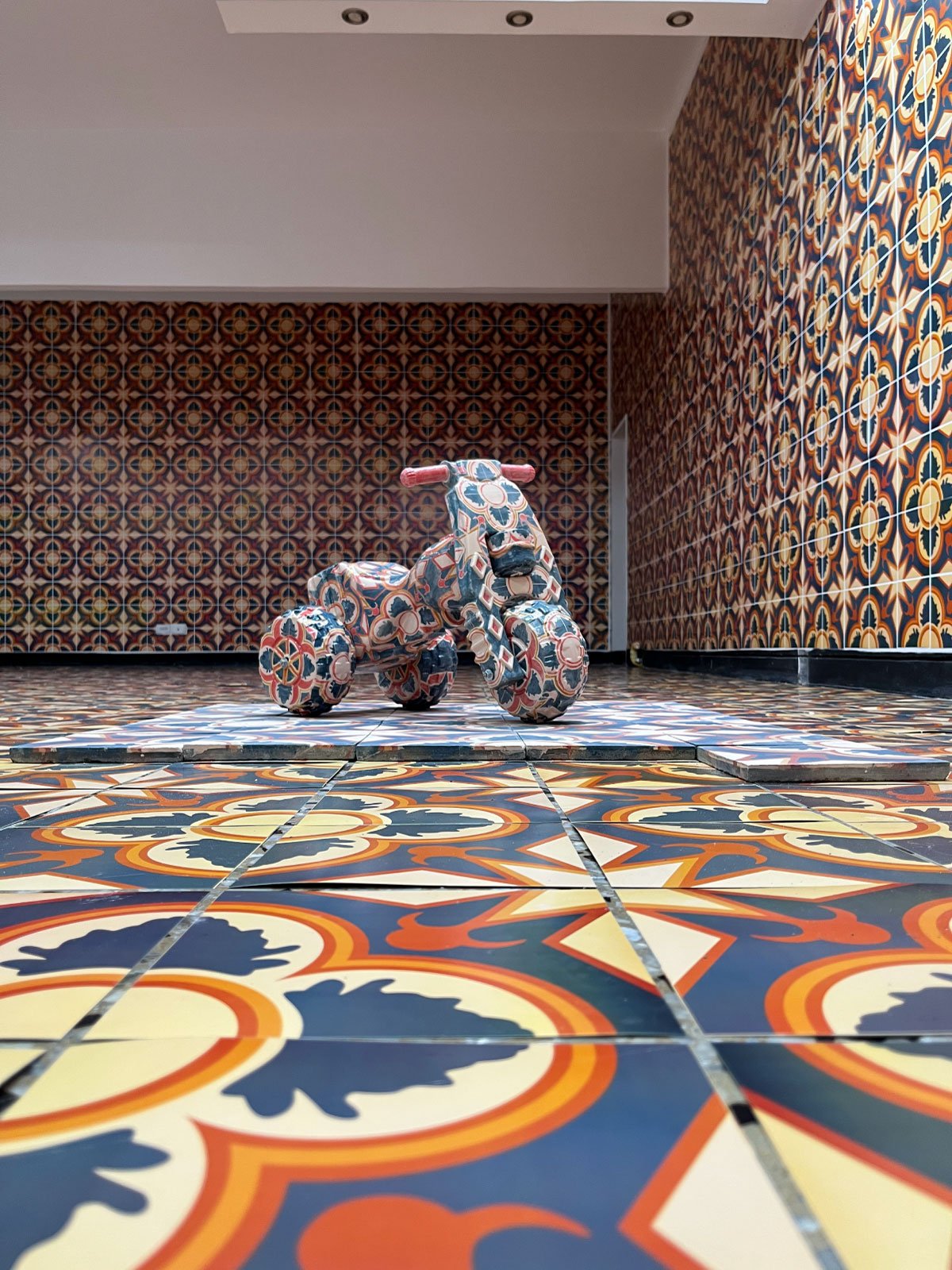
The work reflects on the relationship between past and present, seeking to trigger the faculty of remembrance following a break in continuity. It does so through a journey akin to an archaeological discovery, where floors, rugs, and toys reconstruct a material legacy. This is a shared process, for we participate in a society and context where connections arise from experiences, and where orality, memories, detachment, and storytelling all play a part in constructing memory.
While the location may determine the materials, it is upon surfaces—floors and objects—that I can position the viewer, defining a shared narrative. Locating these experiences does not require a specific production method; the work may take multiple paths in search of material or relational elements, meaning the process itself can become the project. It seeks to spark elements in the viewer that allow them to recall their childhood, rescue shared memories from oblivion, and archive traces of what might have been the start of a game—drawing on small, detached fragments of objects to trigger personal recollections. It also reflects on the role of the archive in the constant quest to preserve memory and on the importance of the inhabitants’ experiences, where the value of other forms of knowledge and ways of life among peoples can be collectively amplified.
Thus, the importance of play becomes evident as a category that reflects the social superstructure; this nature constitutes a microcosm of the world, demonstrating—on a smaller scale and through specific functions—the values and the broader sociocultural structure that produce it. Therefore, in addition to fulfilling a biological function, play is also a cultural phenomenon, insofar as no biological analysis can explain fanaticism, personal taste, or pleasure (Gómez, 1990).
Viewed in this light, considering the hierarchy of participation—and the terms under which play shapes the refinement of identity and personal integrity—reveals it to be a crucial moment in the formation of memory. Consciously encouraging specific types of games to foster particular capabilities is also influenced by the context in which these practices are assessed.
Bibliography
GÓMEZ, H. (1990). *Juegos recreativos de la calle: una herramienta pedagógica*. Santafé.