18 al 27 de Septiembre
Edgar Negret
El Gigante Dormido
Since the Renaissance, the foundation of Western culture has been singularity—that is, the absolute originality of a specific work, whether by a poet or musician, playwright or philosopher, painter or sculptor. Singularity emerged in Greece, yet during the Middle Ages, artists set aside their personalities and embraced the collective style adopted by their social milieu as its own, unchangeable norm (consider Byzantine painting); the individual personality—which the Renaissance succeeded in recovering and the twentieth-century avant-garde movements carried to its ultimate expression—thus ceased to exist.
A quick or a careful look (it makes no difference) at the universal art of the last century and a half reveals that Edgar Negret is one of the most singular and creative artists, for he resembles no other. The significance and greatness of his artistic legacy lie in six fundamental traits:
- Creation of a solid and versatile personal language—coherent and evocative.
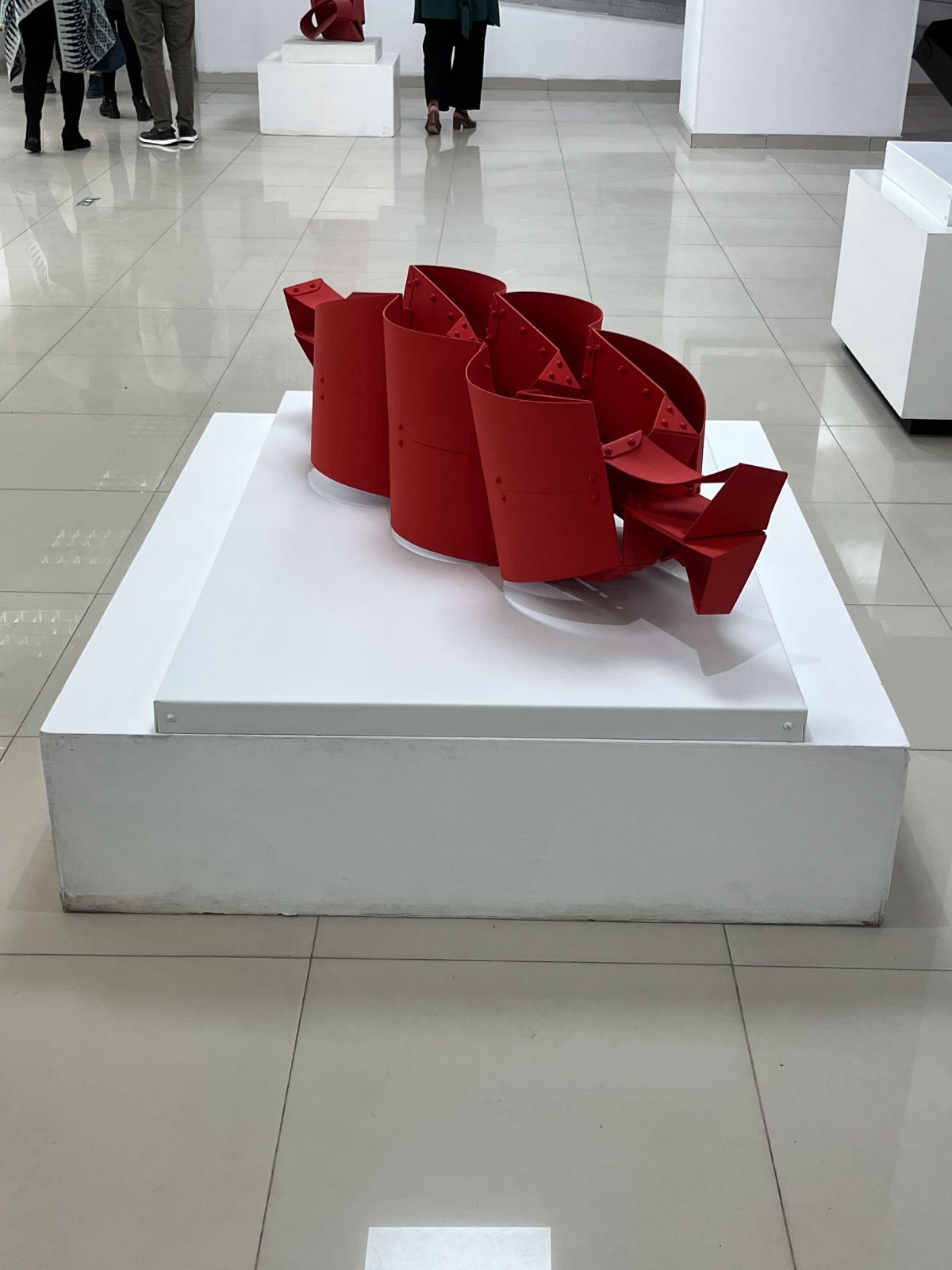
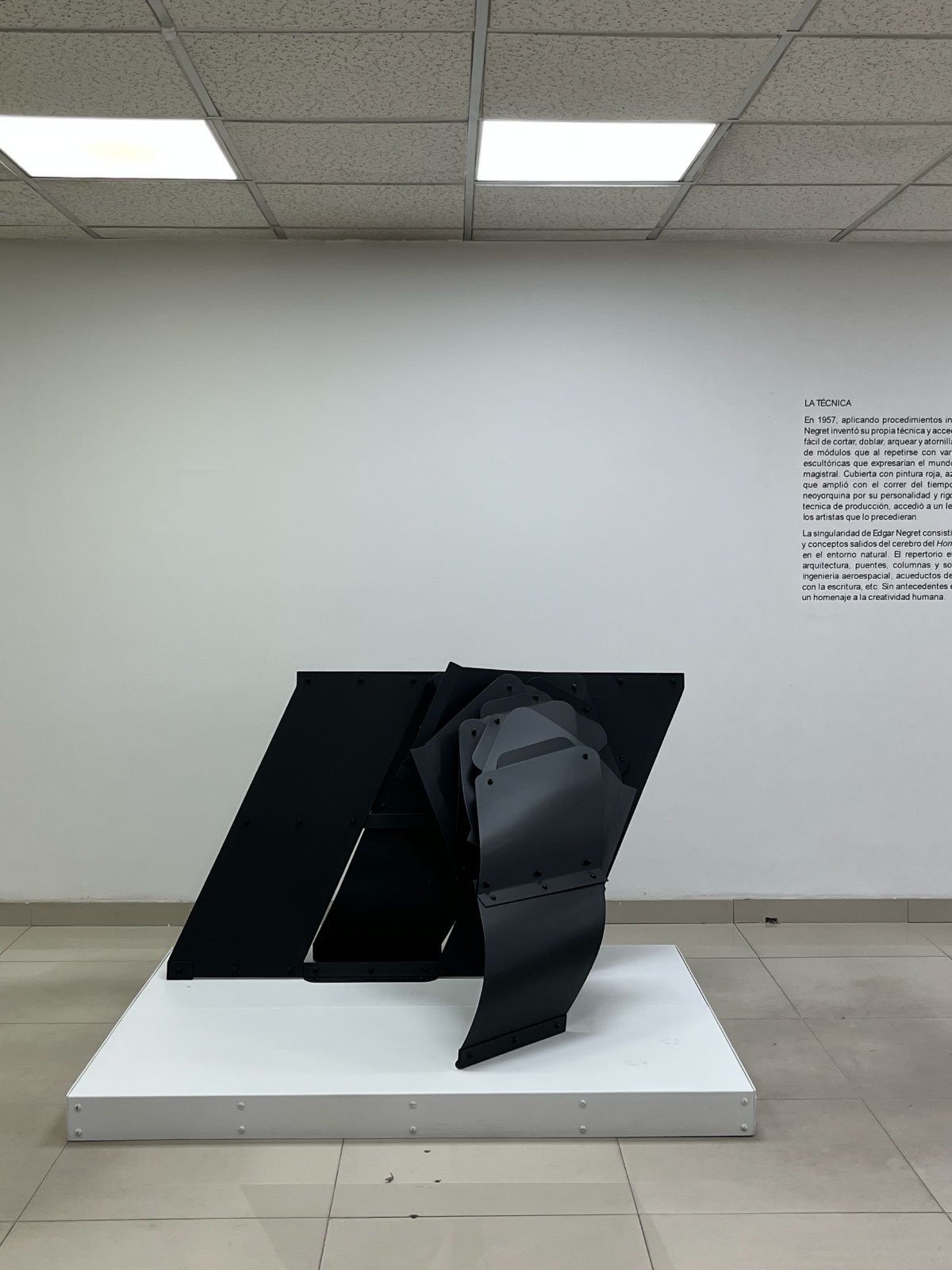
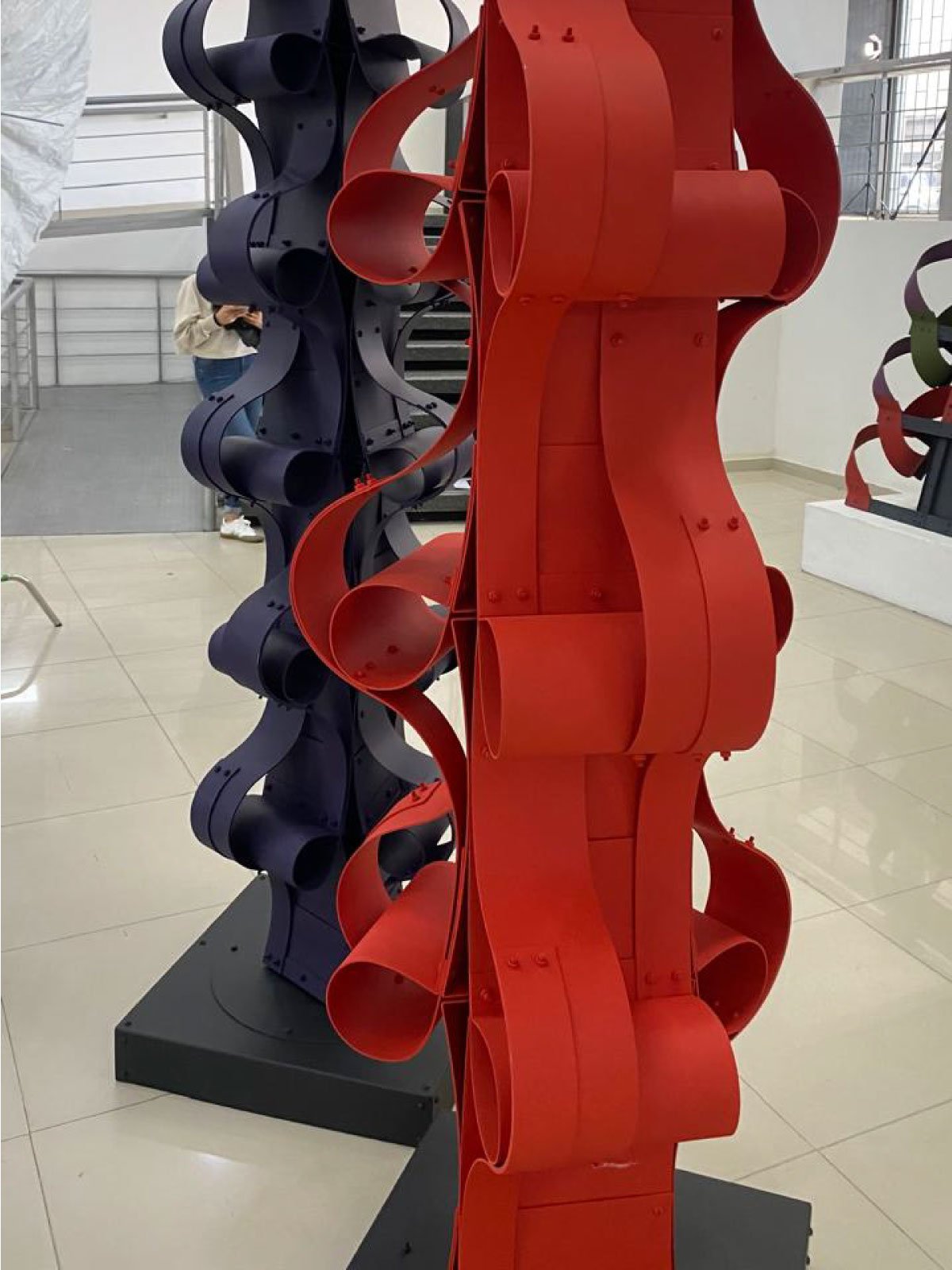
- Use of a technique involving cutting, bending, and screwing together aluminum sheets—an approach adopted out of personal concerns.
- Development of topics using original approaches, avoiding clichés..
- Geometric rigor distinct from that of his contemporaries.
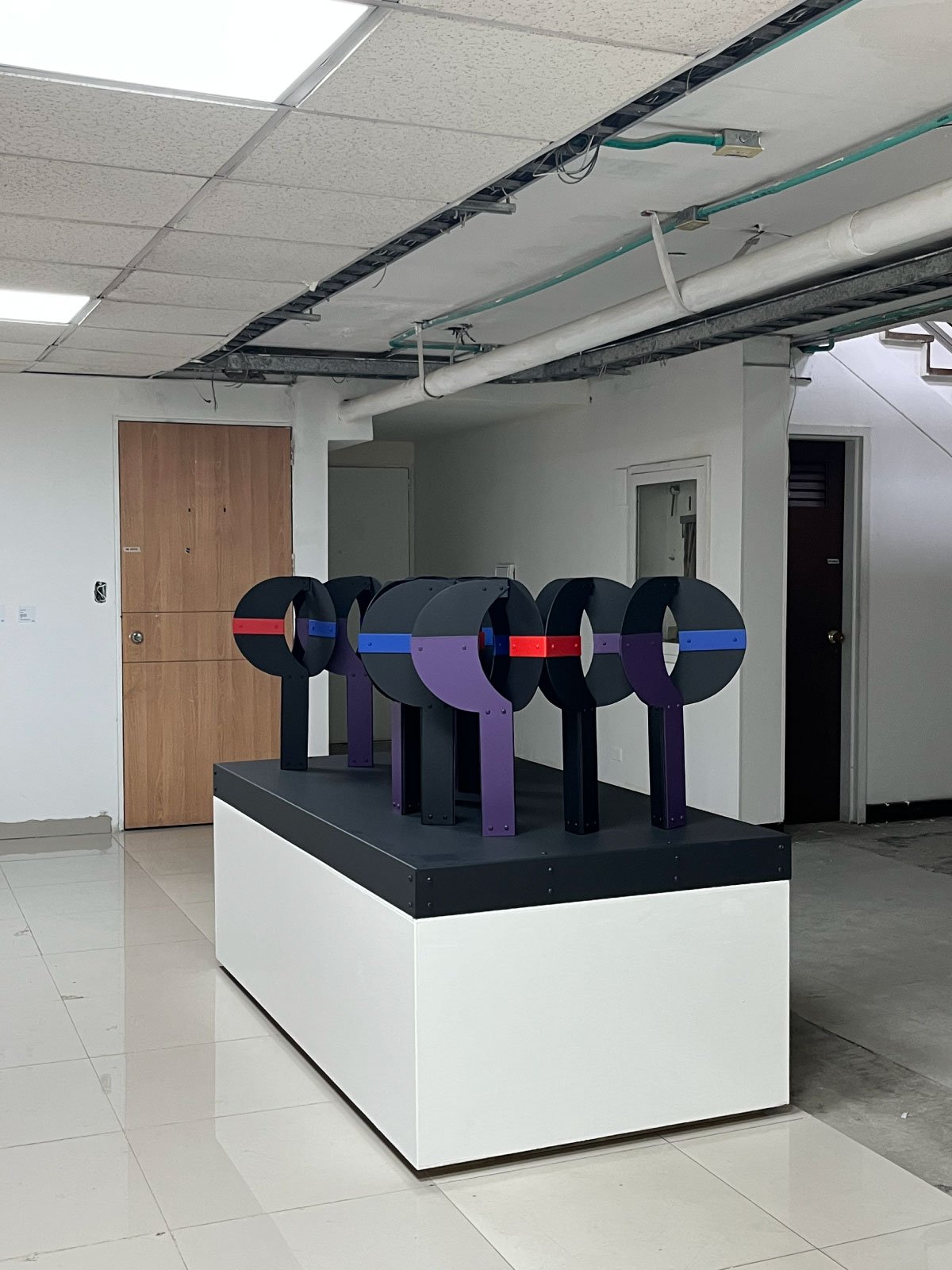
- Use of colors that enhance the sculptural surface to better appreciate the volumes.
- Poetic expression situated between reality and reverie—its greatest merit.
Influenced by Henry Moore, Edgar Negret ventured into organic abstraction immediately after completing his fine arts studies in Cali in 1944—a style he abandoned a few years later. A shift in direction occurred in New York in 1949, when he encountered the work of Alexander Calder—with whom he formed a friendship—and began working with welded iron in a geometric style.
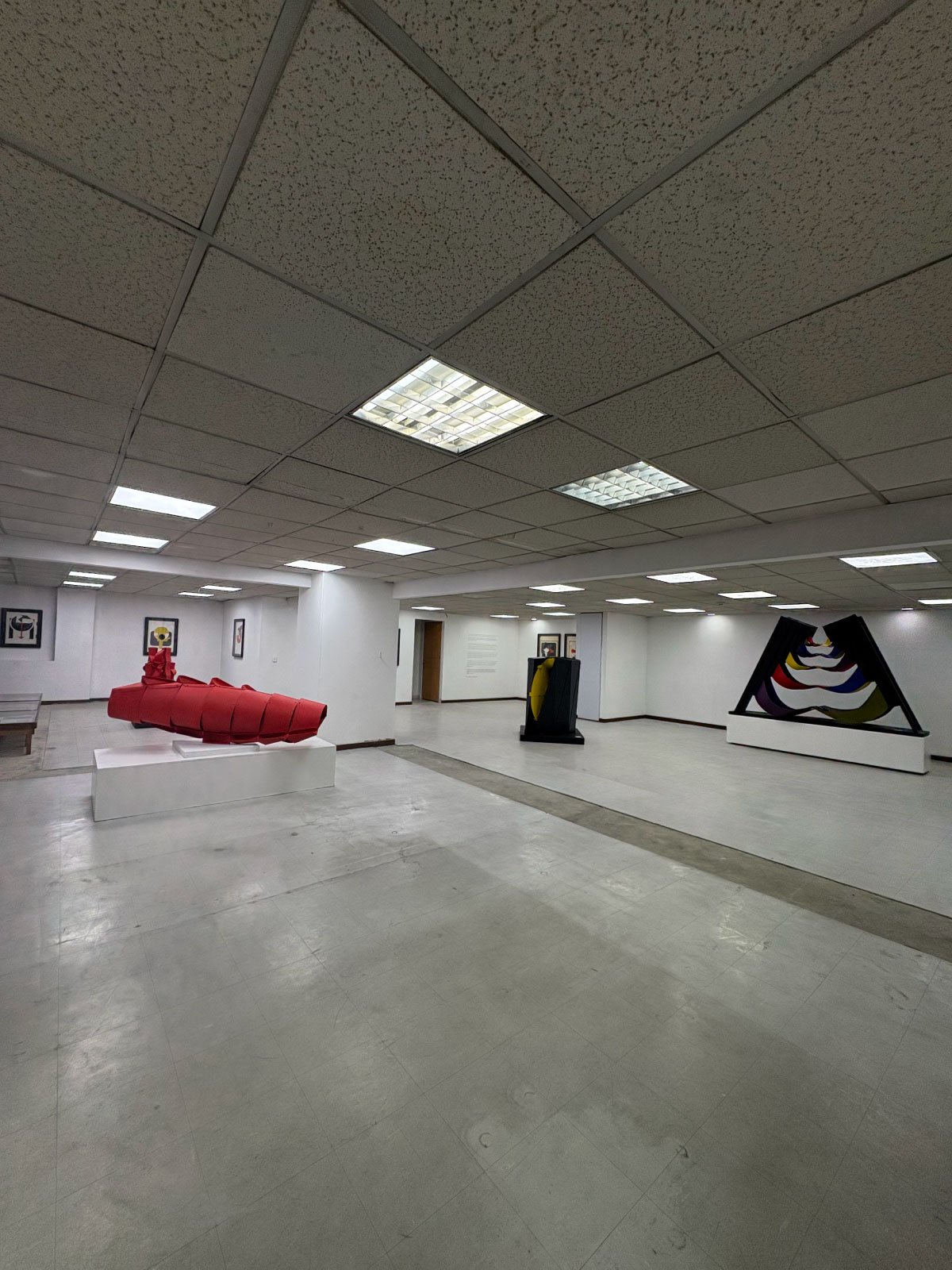
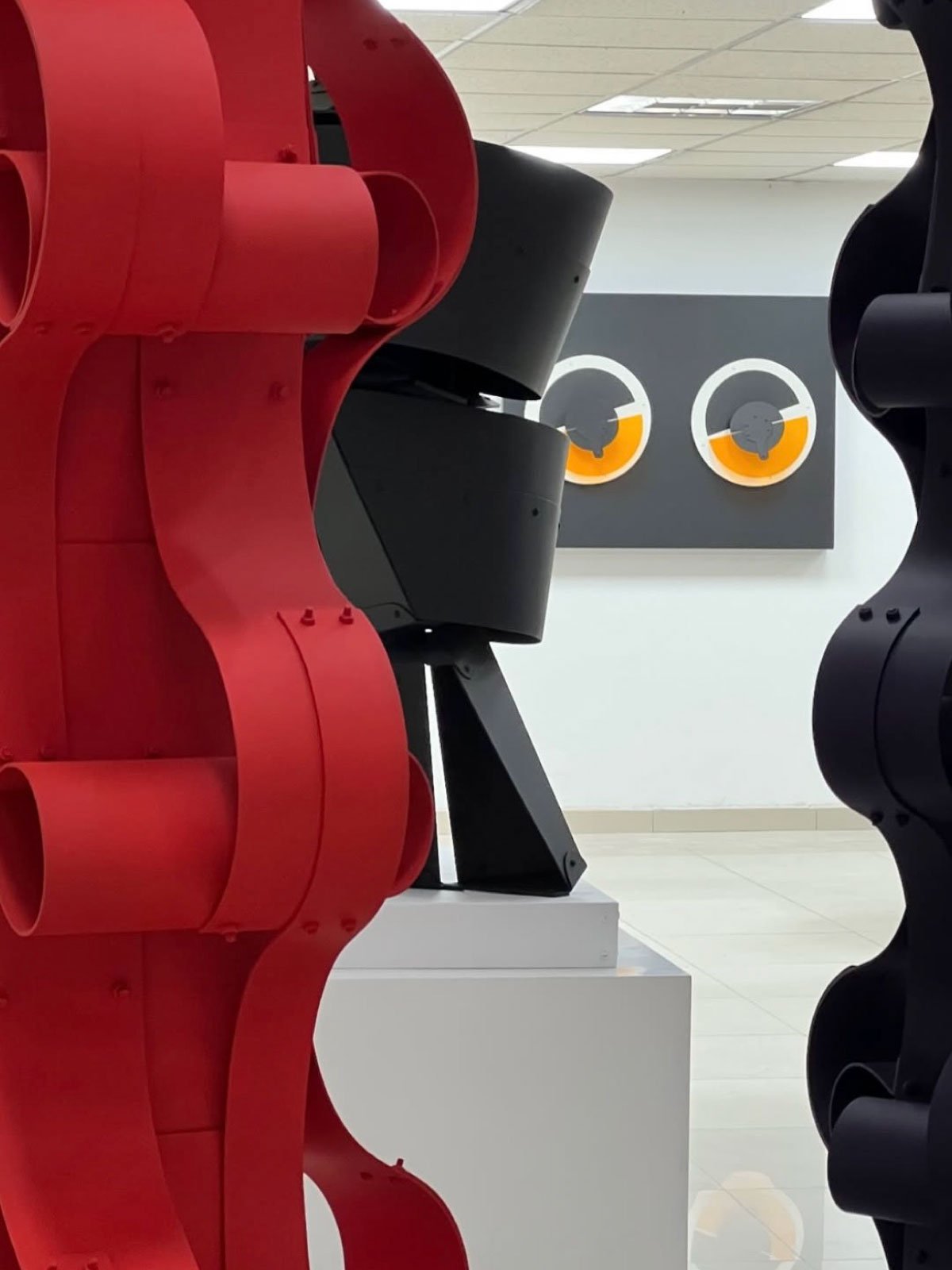
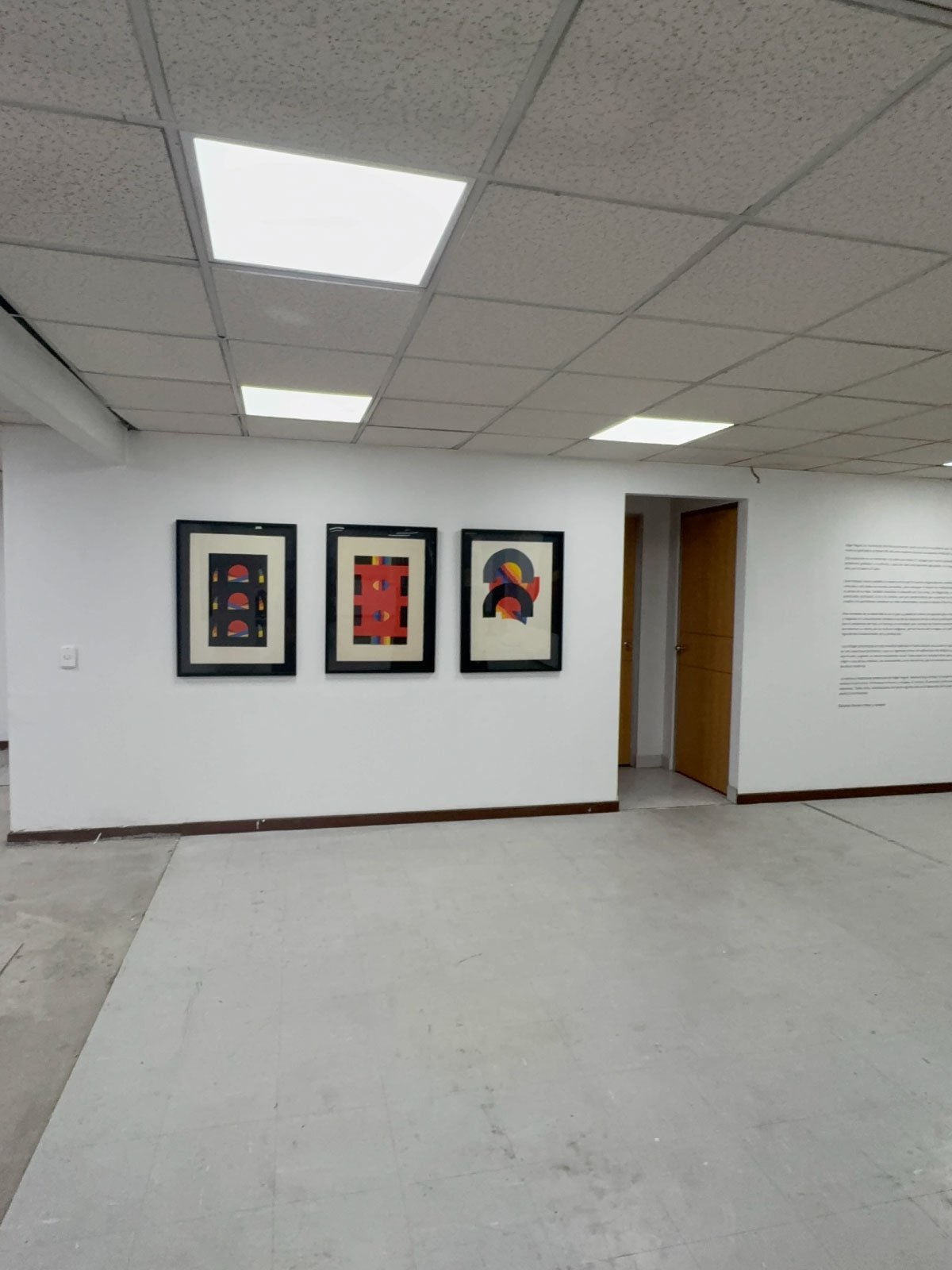
This exhibition by Edgar Negret, conceived by UN_FAIR as a tribute to the great master from Popayán, brings together only works made of cut and assembled aluminum. On display are pieces featuring engineering themes alongside works that express the sculptor’s passion for pre-Columbian art—a subject he studied and appropriated to create variations with a contemporary spirit.
ÁLVARO MEDINA – Curator
THE TECHNIQUE
In 1957, applying processes introduced by the Industrial Revolution, Edgar Negret devised his own technique and fully realized his artistic language. Because it was easy to cut, bend, curve, and screw together, he adopted flat aluminum sheeting as the basis for modular units; by repeating these with variations, he could construct the sculptural structures that expressed the poetic world he had set out to explore with such mastery. Finished with flat coats of red, blue, or black paint—a palette he later expanded—the resulting work impressed New York critics with its distinct character and visual rigor. The specific nature of his production technique gave him access to a versatile, flexible language that set him apart from the artists who had come before him.
Abstraction or Figuration?
During the 1940s and 1950s, abstraction rose to such international prominence that it spawned numerous variations—ranging from Expressionism and Kinetic art to the raw quality of Art Informel and the subtleties of Color Field painting. With the Bauhaus teachings serving as a focal point, many artists became captivated by geometry, among them Edgar Negret. Yet, unlike the vast majority of his contemporaries, the Colombian artist steered away from absolute, total abstraction, driven by an interest in representing aspects of the objective world that resonated with his sensibilities. Thus, his work is simultaneously abstract and figurative. Consequently, his forms bear titles that allow us to recognize the models that inspired them—generally falling into two categories: objects or products of practical use, and those linked to ancient phenomena, rituals, or beliefs—ranging from eclipses to the ritual amulets or fetishes he termed “Magic Apparatuses.”
Originality of the topics
Edgar Negret’s uniqueness lay in creating a body of work based on themes derived from products and concepts born of the *Homo sapiens* mind, rather than simply from elements found in the natural environment. His repertoire is vast: towers and staircases drawn from architecture; bridges, columns, and supports from civil engineering; satellites from aerospace engineering; aqueducts from hydraulic engineering; symbols related to writing; and so forth. Unprecedented in the history of world art, this approach stands as a tribute to human creativity.
THE PRE-COLUMBIANIST NEGRET
El escultor enriqueció su repertorio temático a partir de 1983, cuando visitó la región del Cusco y se lanzó de lleno a celebrar el legado de los Incas, más tarde el de otras civilizaciones Amerindias. Esto explica sus representaciones a) del sol, la luna o el maíz, considerados sagrados por los pueblos aborígenes, b) del quipu (instrumento de registro en el Perú antiguo), c) de los códices mesoamericanos, d) de pirámides, e) de calendarios, f) de tejidos y g) de figuras míticas, indagación plástica sin paralelo concebida para homenajear a los ancestros precolombinos. Porque su norte fue el sur desde temprana fecha, Edgar Negret pudo continuar y enriquecer a su manera las propuestas teóricas del guatemalteco Carlos Mérida, el mexicano David Alfaro Siqueiros y el uruguayo Joaquín Torres-García sin repetir lo hecho por otros.
What is a quipu?
According to Gary Urton, quipus are “implements made of knotted cords, used to record both statistical and narrative information—especially by the Incas, but also by other peoples of the central Andes since pre-Inca times” (Signos del khipu Inka).