18 al 27 de Septiembre
Gonzalo García
Mordiendo polvo
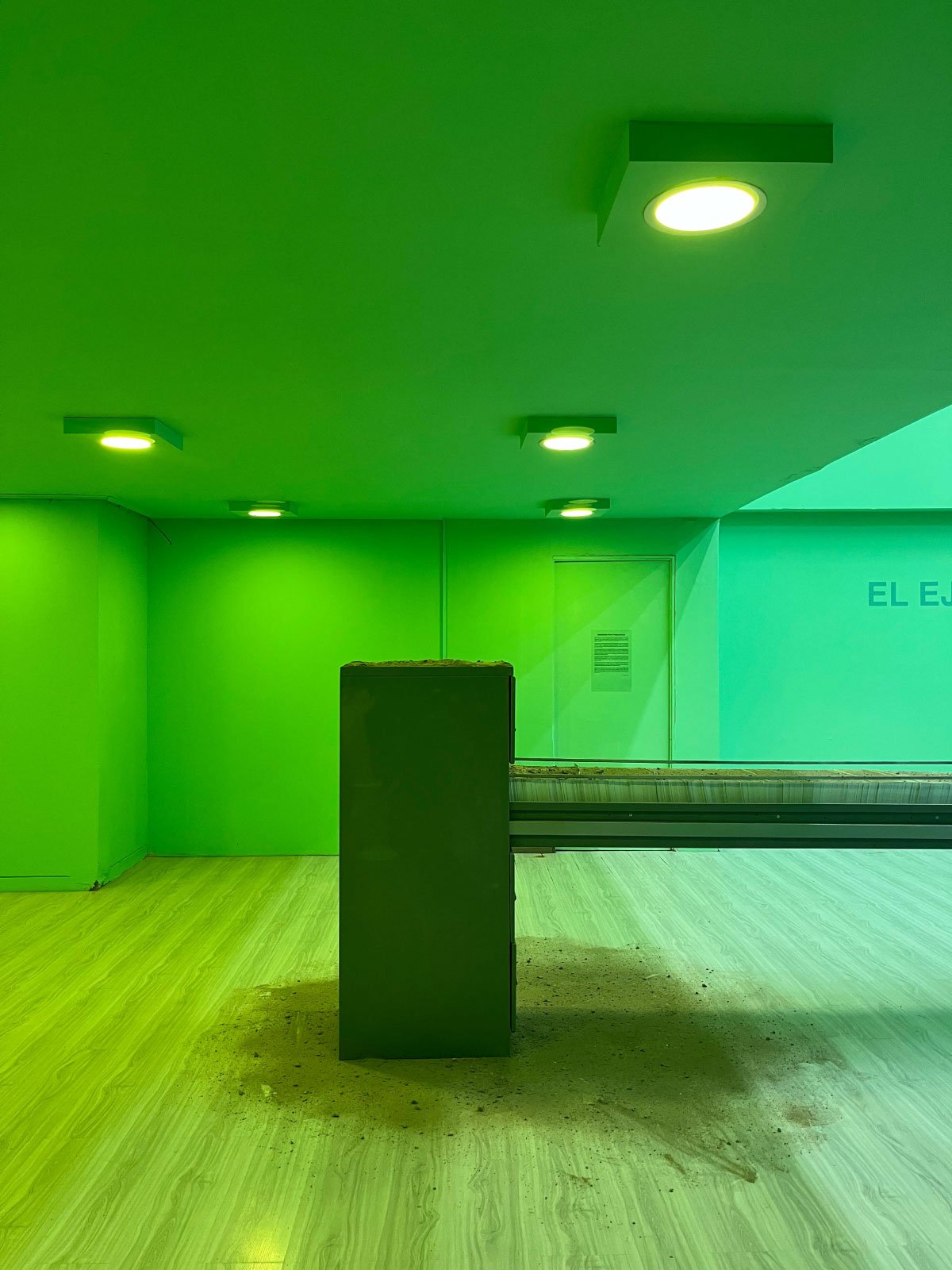
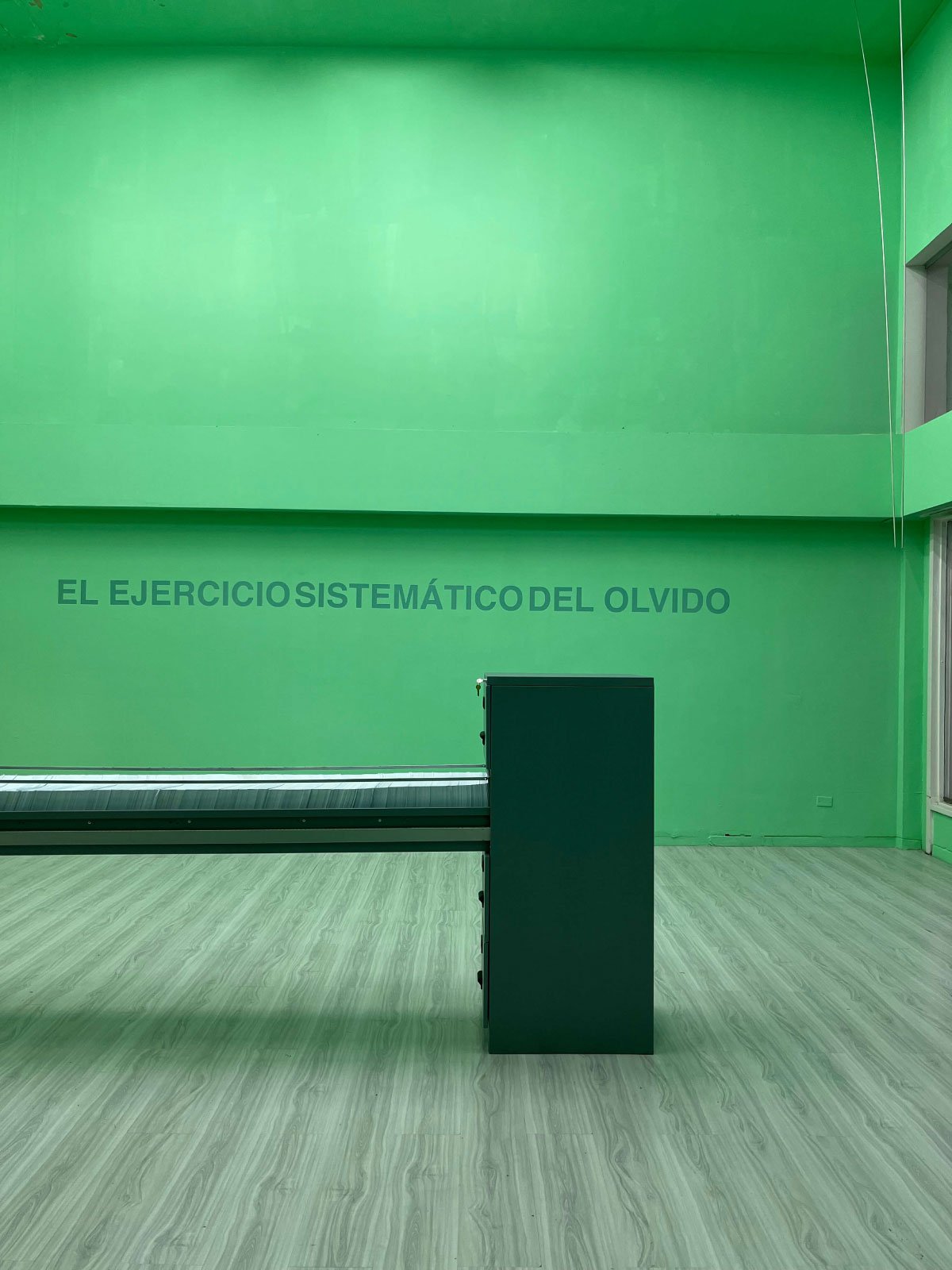
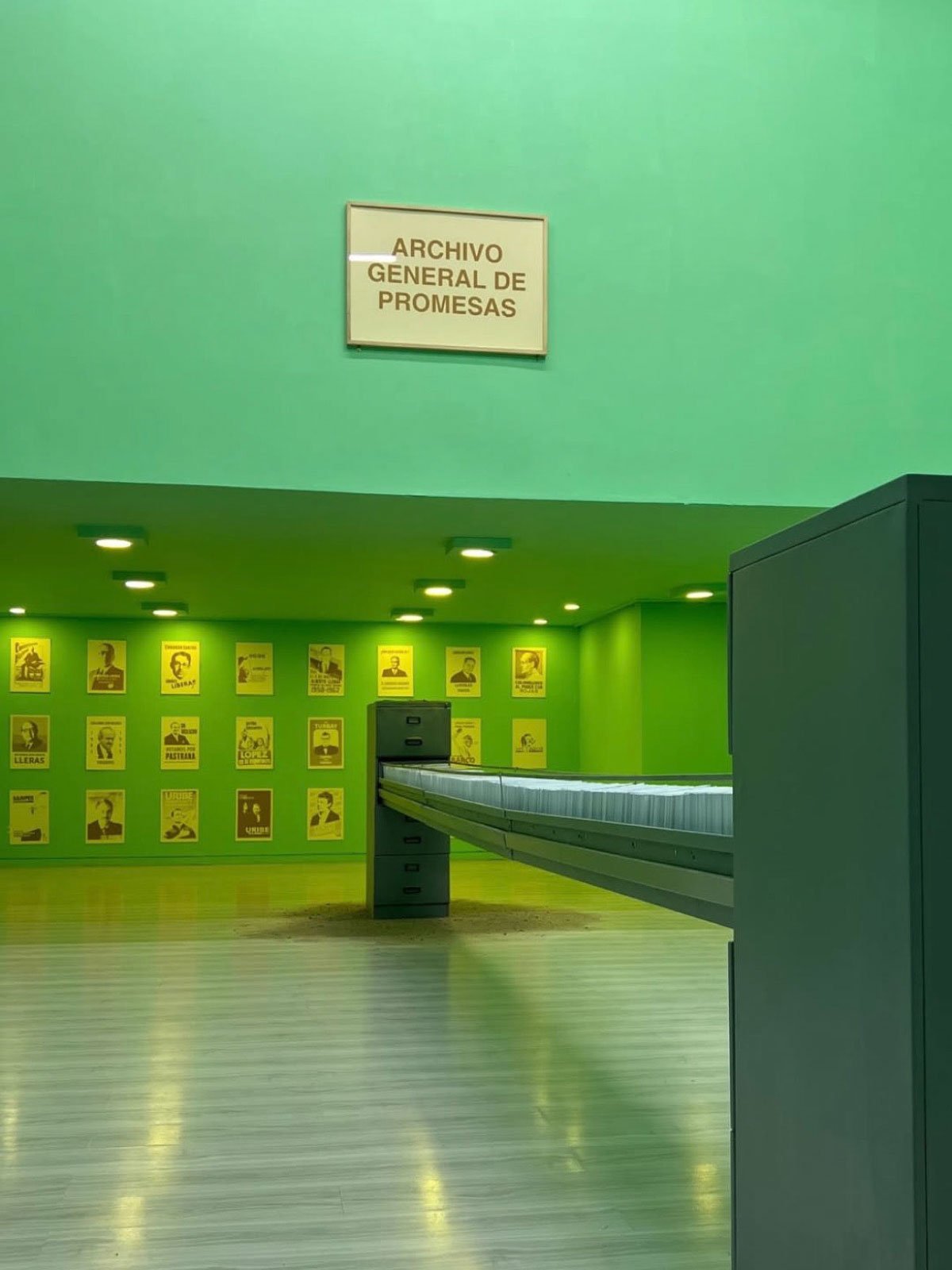
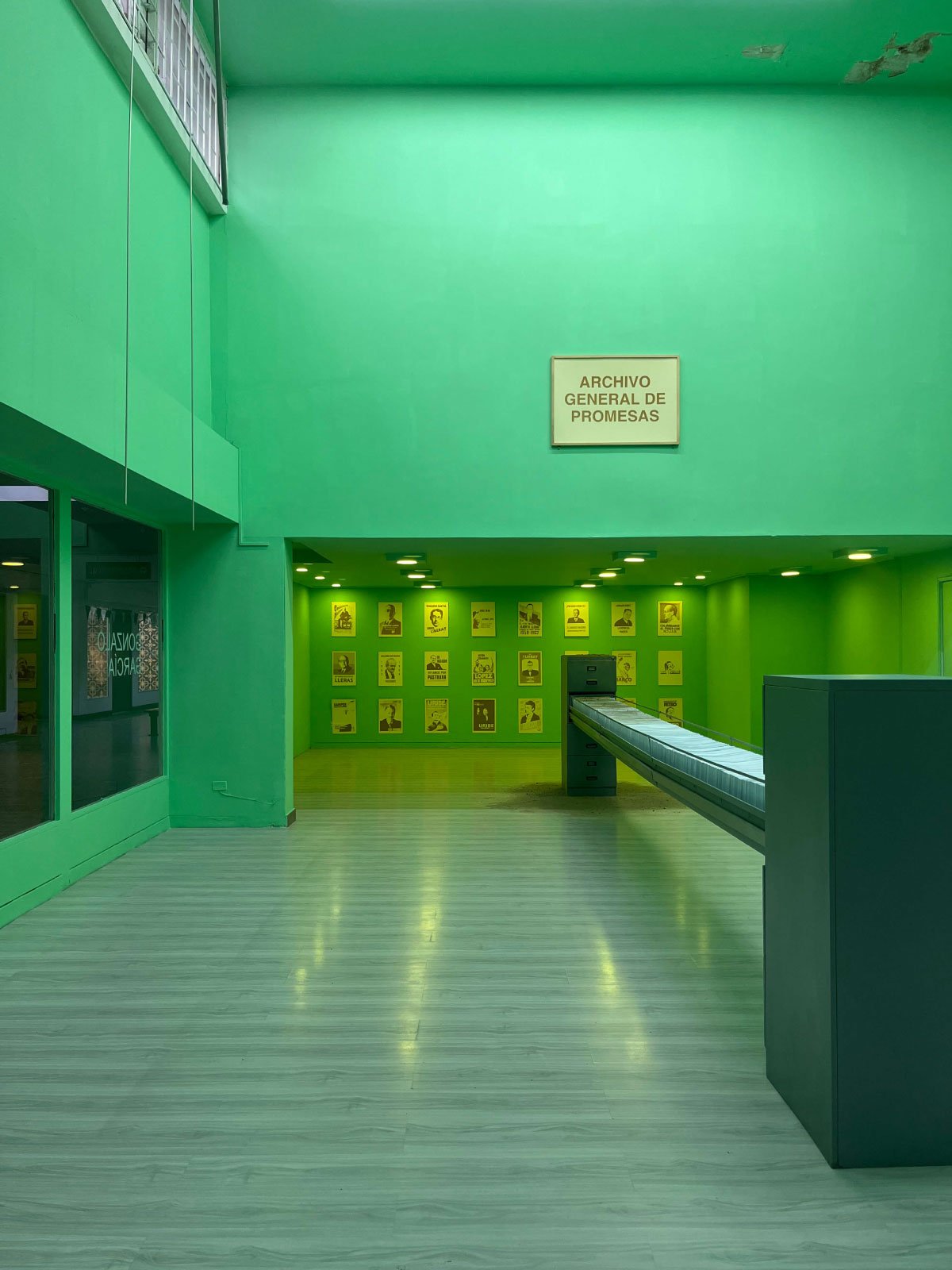
Gonzalo García presents fragments of a visual record of Colombian government election campaigns in dialogue with other remnants of what we deem worthless (though the criteria may be interchangeable). He does so using the very material that naturally accumulates everywhere—yet which preservation protocols systematically purge from any properly sanitized and well-ordered archive: microscopic particles that drift, settle, and relentlessly pile up across reality, all while originating from the decomposition of that very same reality.
The organic and inorganic residues we call dust are time itself in the process of solidifying: they are produced by the erosion of mountains and minerals through the action of water and wind, and by shed skin cells, dead tissues, pollen, and spores. Over millions of years, these settle to form recent stratigraphic layers by recycling older ones, thereby incorporating components of their own era. Thus, scientists are seeking to have the pulverized traces of metals, artificial chemicals, synthetic textiles, and even the radioactive clouds from uranium or plutonium bombs—which drift down from the stratosphere following test (or combat) detonations—or the nanoplastics now permeating the air, officially designated as the thin layer marking our civilization’s rise and fall: a human counterpart to that other clay-and-iridium stratum that stands today as the clearest marker of the end of the Cretaceous period. When speaking of political posters that have shifted—or perhaps been torn away in a *décollage* style—it is unclear whether the reference is to those that once fleetingly occupied city walls during campaigns, or to those other “cartels” that have pierced our society with far greater impact through the exercise of their functions: the drug trade, the judiciary, the waste management sector… Neither type is typically preserved in libraries; most remain merely as family keepsakes or within party headquarters, yet they primarily cling—however tenuously—to a collective memory of images and slogans that once made promises to the future.
Beyond the archive of formal documents, the artist has gathered debris from the immediate surroundings—both street-side and interior—augmented by the crushed rubble left over from recent renovations. Instead of conducting a laboratory analysis of these substances (as originally intended), he chose to showcase the production process of his own pigments, presented here in artisanal versions with names driven by ingenious marketing. This is the dust that adheres to his images through an experimental photographic chemical process—combining light-sensitive emulsion with these raw materials (or detritus)—thereby recording the turbulent trajectory of a politics that constitutes both our recent past and a present in a state of constant demolition.
Emilio Tarazona, Curator